
Fire safety regulations in India are the laws and standards that set a building's fire safety requirements, from its exits to its alarms. They are also called fire safety norms. Fire services are a State subject, so each state sets its own fire safety law.1
The National Building Construction Standards 2026 (NBCS 2026) is the national reference, while state law decides what is mandatory. In Maharashtra, that law is the Maharashtra Fire Prevention & Life Safety Measures Act, 2006 (Amendment 2023).2 It makes the owner or occupier answerable for compliance.
As such, the rules that apply to your building depend on three things. Its use, height and location. Together, they decide whether your facility needs a fire safety audit, and how often.
Major Fire Safety Laws and Regulations in India
Fire safety rules in India come from more than one law. Below are the ones a building owner deals with most:
- State fire Act: In Maharashtra, the Maharashtra Fire Prevention & Life Safety Measures Act, 2006 (Amendment 2023), with its Rules.3
- NBCS 2026 (SP 7:2026, Part F): The national fire and life safety standard, used for guidance.
- Occupational Safety, Health and Working Conditions Code, 2020: Safety duties for factories. It replaced the Factories Act, 1948 in November 2025.45
- CEA (MSES) Regulations, 2023: The Central Electricity Authority's rules on periodic electrical inspection and testing, mandatory for certain categories of consumers.6 An electrical safety audit covers it.
In Maharashtra, only a licensed Fire and Life Safety Auditor may conduct the two-yearly audit under Section 45A, and the Directorate of Maharashtra Fire & Emergency Services authorises them. PowerTech is a Licensed Fire & Life Safety Auditor, licence MF&ES/F&LSA/0029.
Fire Safety Standards in India: NBCS 2026 and the IS Codes
The Bureau of Indian Standards (BIS) publishes NBCS 2026 (SP 7:2026) as India's national building standard. It replaced the National Building Code of India 2016 on 30 April 2026.7 Its Part F covers fire and life safety.
It is voluntary and binds only where an authority adopts it or a contract requires it. It also treats any building of 24 metres or more as high-rise, whatever its use.1
Below are the latest Indian Standards (IS) for each fire protection system:
- Fire extinguishers: IS 2190:20248
- **Fire detection and alarm systems**: IS 2189:20269, with the IS/ISO 7240 series for components10
- Sprinkler systems: IS 15105:202111
- Hydrants and hose reels: IS 3844:1989 (internal) and IS 13039:2014 (external)10
- Fire pumps: IS 15301:200312
- Fire doors: IS 3614:202113
- Firestops: IS 12458:201914
Fire Safety Requirements for Different Types of Buildings
The strictest fire safety requirements in Maharashtra apply to the buildings listed in Section 45 of the Act. Below are the buildings it covers:
- Buildings above 30 metres: Those used as hotels, hospitals, offices or shops, or for mixed occupancy.
- Residential buildings above 70 metres: Tall housing society towers fall here.
- Industrial sites: Large oil and gas sites such as refineries and LPG bottling plants, and industrial buildings of 30,000 square metres or more (moderate hazard) or 10,000 square metres or more (high hazard).
Each of these needs a fire safety audit every two years. Its fire fighting systems also need an automated continuous monitoring system (ACMS).2
Housing societies in buildings of 70 metres or less fall outside Section 45. For them, the audit is advisable but not a legal duty. They may still need Form B, the half-yearly maintenance certificate, where the Act requires fire safety measures in the building.
Outside Maharashtra, the state's own fire law applies. Codes and rules in other states generally provide for periodic fire safety assessment.
Who Is Responsible for Fire Safety Compliance?
Under the Maharashtra Act, the building's owner is responsible for fire safety compliance. Where the owner cannot be traced, the occupier is. In practice, the owner arranges the approvals and audits the Act asks for, and acts on their findings.
The owner or occupier of a Section 45 building must also appoint a fire officer or fire supervisor. The Director of Maharashtra Fire & Emergency Services sets their qualifications and duties.2
Note that the duty stays with the owner or occupier even when a maintenance contractor services the fire systems or a licensed auditor inspects them.
Is a Fire NOC Mandatory in India?
In Maharashtra, yes, for every building that the Act's Schedule I covers. In other states, the state's own fire law decides.
The Act calls the fire NOC (no objection certificate) a Fire Safety Approval. The owner obtains it from the Chief Fire Officer of the local or planning authority, or from the Director where there is none.2 Below are its three stages:
- Provisional: At the plan stage
- Final: At completion, before the building is occupied
- Renewal: Later on, generally with evidence that the fire systems are in place and maintained
The building also gets no completion certificate until it meets the Schedule I requirements.
Fire Safety Inspection and Compliance Procedures
Compliance in Maharashtra runs on a cycle of certificates. Below are the ones a building owner submits:
- Form A: A Licensed Agency certifies that the installed fire safety measures comply with the Act.
- Form B: A Licensed Agency certifies every January and July that the measures are kept in good repair.2
- Form V: In Section 45 buildings, a licensed auditor conducts the fire safety audit in person every two years and signs this certificate.3
- Forms A-1 and B-1: In Section 45 buildings, a Licensed Agency certifies the ACMS once it is installed, then every January and July.3
Fire officers also inspect. The Director, the Chief Fire Officer or a nominated officer gives three hours' notice and generally visits between sunrise and sunset. Any deviations go into a notice with a deadline to fix them.15
Penalties for Violating Fire Safety Rules in India
Each state's fire law sets its own penalties. In Maharashtra, breaking the Act's main fire safety duties can mean rigorous imprisonment of six months to three years and a fine of ₹20,000 to ₹50,000, plus up to ₹3,000 a day while the offence continues.16
The Act also allows the following steps:
- Vacating and sealing: In imminent danger, fire officers can order a building vacated. If the order is ignored, they can have its electricity and water cut off and the building sealed.17
- False certificates: A Licensed Agency that certifies missing measures can be prosecuted, and a licensed auditor can lose the licence.18
For a recent example from Pune, please read our news report: Fire Safety Lapses in Pune.
Fire Safety Measures and Compliance Checklist for Buildings
A compliant building needs working fire safety measures and current paperwork. Below are the measures to check:
- Fire extinguishers that are serviced and in date
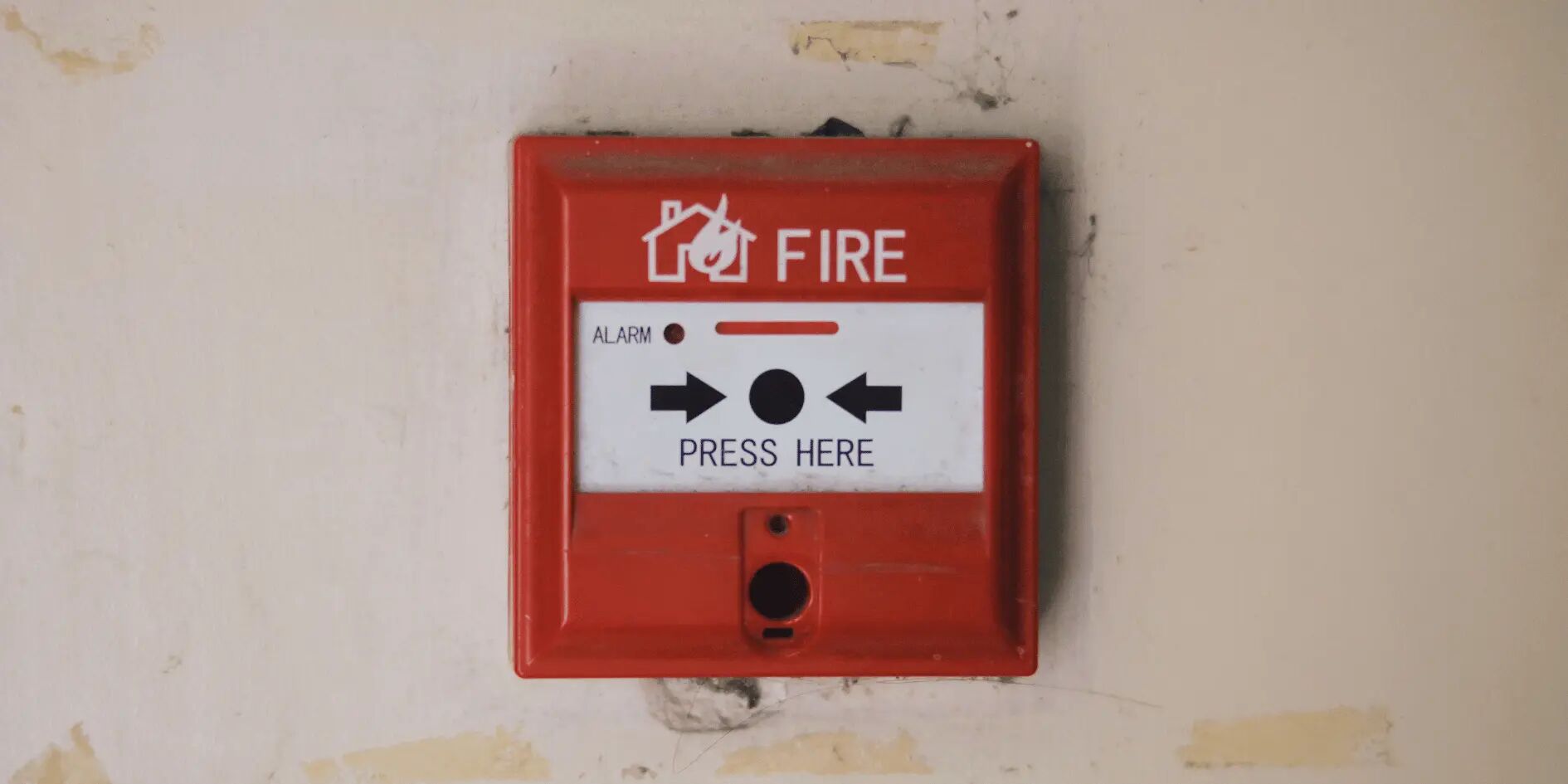
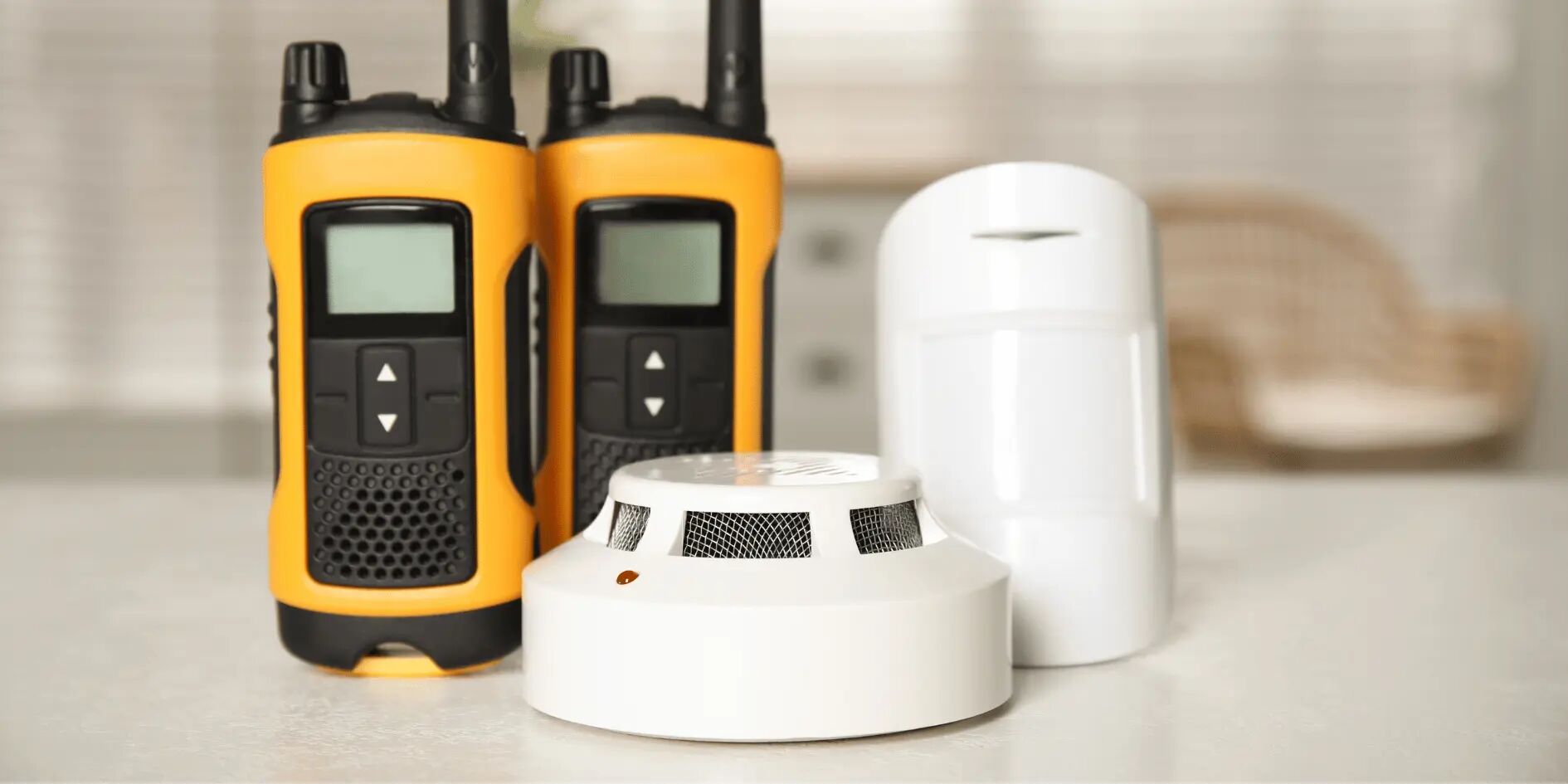
- A fire detection and alarm system that shows no faults
- Sprinkler and hydrant systems, with the fire pumps tested on schedule
- Clear escape routes, and fire doors that close on their own
- Emergency lighting and exit signs that work during a power cut
- Firestops intact where cables and pipes pass through walls
- An electrical installation checked with earth pit testing and a thermography audit
Below are the documents and dates to keep current:
- Fire Safety Approval: Renewed before it lapses
- Forms A and B: Form A on file, and Form B every January and July
- ACMS certificates: Forms A-1 and B-1, in Section 45 buildings
- Audit certificate: Form V every two years, in Section 45 buildings
- Fire officer: Appointed in every Section 45 building
- Book a fire safety audit at the right time: Plan it before the Section 45A due date or a fire NOC renewal, and after any fire incident or change of use. As such, the experts at PowerTech say an independent audit turns this checklist into a prioritised list of fixes. A small building outside Section 45 can start with this list and its maintenance contractor.
FAQs
Q. Are fire safety norms the same in every state?
No. Each state makes its own fire safety law, because fire services are a State subject. NBCS 2026 is a shared national reference, but it binds only where an authority adopts it.
Q. How often is a fire audit required in Maharashtra?
Once every two years, for the buildings listed in Section 45 of the Act. These include hotels and hospitals above 30 metres, and residential buildings above 70 metres.
Q. Is Form B the same as a fire audit?
No. Form B is a maintenance certificate that a Licensed Agency issues every January and July. The fire audit is a separate check by a licensed auditor. It falls due every two years in Section 45 buildings.
PowerTech: Licensed Fire & Life Safety Auditor for Fire Safety Compliance in Maharashtra
PowerTech has conducted 1,200+ energy and safety audits since 2014. We are headquartered in Pune, with offices in Mumbai and Nashik. Our Licensed Fire & Life Safety Auditor licence is MF&ES/F&LSA/0029.
This article covers the fire safety rules that apply to buildings in India, with Maharashtra's Act as the worked example.
We offer the following audit and compliance services:
- Fire Safety Audit
- Electrical Safety Audit
- Energy Audit
- Thermography Audit
- Earth Pit Testing
- Power Quality Audit
- Energy-Saving Implementation on the BOT Model
Get In Touch
Tell us what is due and where the building is, whether it is a Section 45A audit, a Form B date or a fire NOC renewal. After a short call about the building's use and height, we send a scope of work and commercial terms written for it. The qualified auditor named on our licence conducts the audit in person.
Book a fire safety audit to see where your building stands before the next due date.
References
- (2026). National Building Construction Standards 2026 (SP 7:2026), Part F: Fire and Life Safety. Bureau of Indian Standards (copy hosted by the Directorate of Fire & Emergency Services, Goa). https://dfes.goa.gov.in/wp-content/uploads/2026/05/sp7_2026_nbcs-212-1480.pdf
- (2006, as amended to 2023). The Maharashtra Fire Prevention and Life Safety Measures Act, 2006 (Mah. III of 2007). Directorate of Maharashtra Fire & Emergency Services. https://mahafireservice.gov.in/directorate/fire-act/2006/Maharashtra%20Fire%20Prevention%20and%20Life%20Safety%20Measures%20Act,%202006..pdf
- (12 June 2025). Maharashtra Fire Prevention and Life Safety Measures (Amendment) Rules, 2025, Notification No. MFS-2023/C.R.370/UD-14. Urban Development Department, Government of Maharashtra. https://mahafireservice.gov.in/directorate/fire-act/2025/Rules%20(Amended)%20English.pdf
- (28 September 2020). The Occupational Safety, Health and Working Conditions Code, 2020 (Act No. 37 of 2020), section 143. India Code, Legislative Department. https://www.indiacode.nic.in/bitstream/123456789/22041/1/2020-37.pdf
- (8 December 2025). Welfare of Organised and Unorganised Sectors. Press Information Bureau, Ministry of Labour & Employment. https://labour.gov.in/sites/default/files/pib2200433.pdf
- (2023). Central Electricity Authority (Measures relating to Safety and Electric Supply) Regulations, 2023. Central Electricity Authority. https://cea.nic.in/regulations-category/measures-relating-to-safety-and-electric-supply/?lang=en
- (9 May 2026). SP 7: 2026 Explained: New BIS Building Standards Replacing NBC 2016. Agile Regulatory. https://www.agileregulatory.com/latest-updates/bis-update-2026-national-building-code-2016-replaced-by-sp-7-2026
- (2024). IS 2190:2024, Selection, Installation and Maintenance of First-aid Fire Extinguishers, Portable and Mobile, Code of Practice (Fifth Revision). Bureau of Indian Standards. https://services.bis.gov.in/php/BIS_2.0/bisconnect/knowyourstandards/Indian_standards/isdetails/MzIyMDU=
- (2026). IS 2189:2026, Selection, Installation and Maintenance of Automatic Fire Detection and Alarm System, Code of Practice (Fifth Revision). Bureau of Indian Standards. https://www.services.bis.gov.in/php/BIS_2.0/bisconnect/knowyourstandards/Indian_standards/isdetails/NjY0ODE=
- (Accessed 21 October 2026). Published Standards: Fire Detection and Alarm Systems, listing the IS/ISO 7240 series, IS 3844:1989 and IS 13039:2014. Bureau of Indian Standards. https://www.services.bis.gov.in/php/BIS_2.0/dgdashboard/published/sub_sub_grp_stn_list/138
- (2021). IS 15105:2021, Design and Installation of Fixed Automatic Sprinkler Fire Extinguishing Systems, Code of Practice (First Revision). Bureau of Indian Standards. https://www.services.bis.gov.in/php/BIS_2.0/bisconnect/knowyourstandards/Indian_standards/isdetails/MjYwNDU=
- (2003, reaffirmed August 2023). IS 15301:2003, Installation and Maintenance of Fire Fighting Pumps, Code of Practice. Bureau of Indian Standards. https://www.services.bis.gov.in/php/BIS_2.0/bisconnect/knowyourstandards/Indian_standards/isdetails/NzM3Ng==
- (2021). IS 3614:2021, Fire Doors and Doorsets, Specification (First Revision). Bureau of Indian Standards. https://www.services.bis.gov.in/php/BIS_2.0/bisconnect/knowyourstandards/Indian_standards/isdetails/MjU4MDM=
- (2019). IS 12458:2019, Fire Resistance of Through Penetration Firestops, Method of Test (First Revision). Bureau of Indian Standards. https://services.bis.gov.in/php/BIS_2.0/bisconnect/knowyourstandards/Indian_standards/isdetails/MzgxNQ==
- (2006, as amended to 2023). The Maharashtra Fire Prevention and Life Safety Measures Act, 2006 (Mah. III of 2007), sections 5 and 6. Directorate of Maharashtra Fire & Emergency Services. https://mahafireservice.gov.in/directorate/fire-act/2006/Maharashtra%20Fire%20Prevention%20and%20Life%20Safety%20Measures%20Act,%202006..pdf
- (2006, as amended to 2023). The Maharashtra Fire Prevention and Life Safety Measures Act, 2006 (Mah. III of 2007), section 36. Directorate of Maharashtra Fire & Emergency Services. https://mahafireservice.gov.in/directorate/fire-act/2006/Maharashtra%20Fire%20Prevention%20and%20Life%20Safety%20Measures%20Act,%202006..pdf
- (2006, as amended to 2023). The Maharashtra Fire Prevention and Life Safety Measures Act, 2006 (Mah. III of 2007), section 8. Directorate of Maharashtra Fire & Emergency Services. https://mahafireservice.gov.in/directorate/fire-act/2006/Maharashtra%20Fire%20Prevention%20and%20Life%20Safety%20Measures%20Act,%202006..pdf
- (2006, as amended to 2023). The Maharashtra Fire Prevention and Life Safety Measures Act, 2006 (Mah. III of 2007), sections 10(2), 45A(6) and 45A(8). Directorate of Maharashtra Fire & Emergency Services. https://mahafireservice.gov.in/directorate/fire-act/2006/Maharashtra%20Fire%20Prevention%20and%20Life%20Safety%20Measures%20Act,%202006..pdf
Leave a Reply
Your email address will not be published. Comments appear after we have approved them. Required fields are marked *.