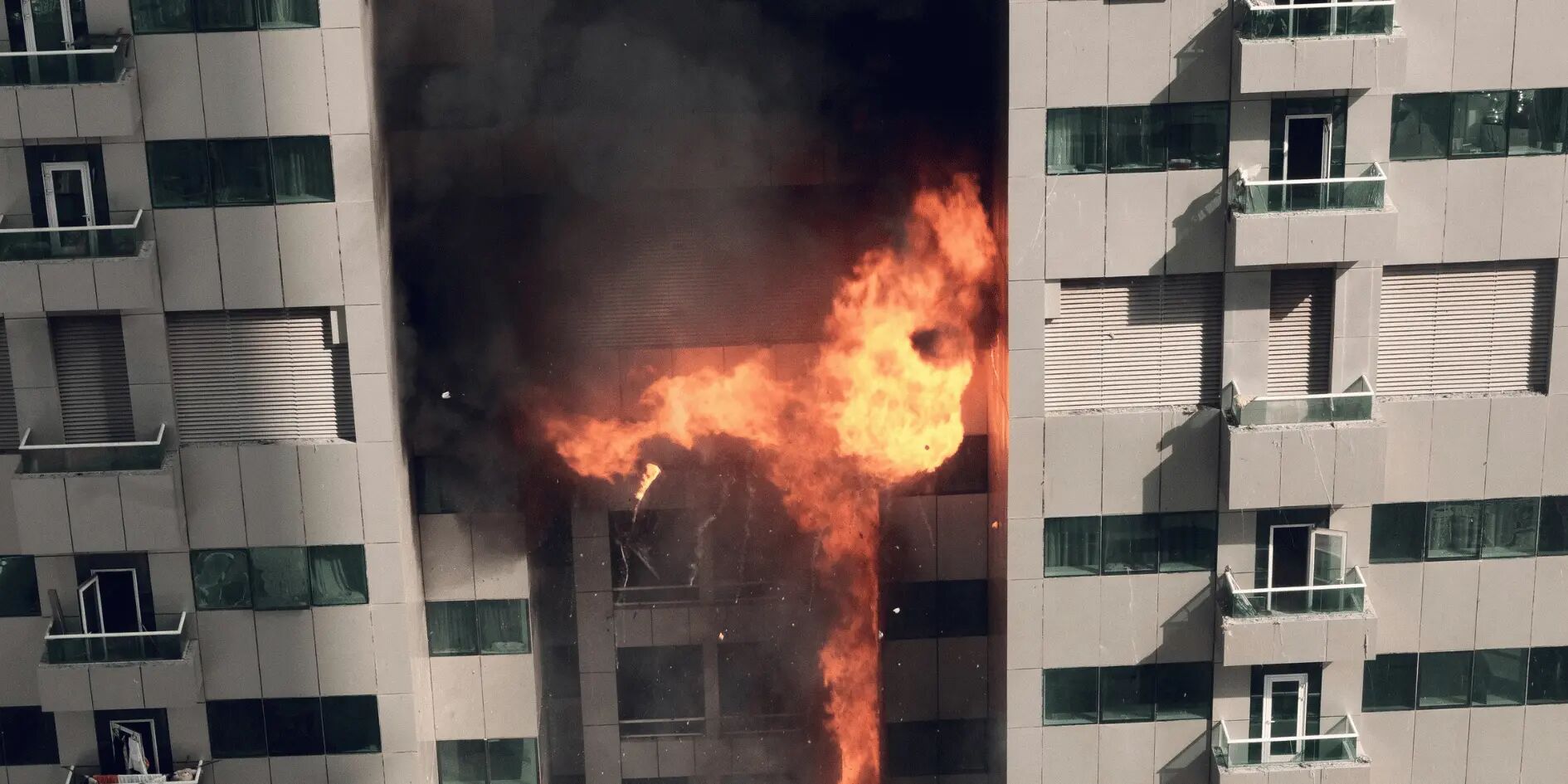

Fire safety rules are specified by the Government of India to protect both people and property. They are legal duties and minimum measures that a residential building must follow to prevent fires and ensure every resident can evacuate safely. Such rules vary by the building's height. Rules become stricter as buildings get taller. The National Building Code of India, NBCS 2026 (SP 7:2026), lists which systems are needed at each height.1 In Maharashtra, the duty to keep these systems in working order at all times usually falls on the society and its managing committee, as per the Maharashtra Fire Prevention and Life Safety Measures Act, 2006.2
In this article, we will discuss Fire Safety Rules for Housing Societies in detail. We will cover why fire safety matters in a residential building, the checklist of rules every society should follow, the most common mistakes, and who is responsible for fire safety in a housing society. Then discuss whether a fire audit is mandatory.
The Importance of Fire Safety in Residential Buildings
In most cases, a fire in a housing society starts from everyday things:
- LPG cylinders and gas pipelines in the kitchens
- Overloaded extension boards
- E-bikes charging in the parking
- The meter room used as a storeroom
- Old furniture and waste in the staircase
A fire at night is the most dangerous, as most residents are asleep, and smoke usually rises up the staircase, which is the main way out for everyone, including children and senior citizens. That's why every managing committee needs a simple fire safety checklist, which we will discuss in the next section.
Housing Society Fire Safety Checklist (10 Fire Safety Rules Every Society Should Follow)
Below are ten fire safety rules every residential building committee can use as a monthly checklist to prevent fires and their impact on people or property.
1. Keep the Fire Safety Approval and Form B Up to Date
The Final Fire Safety Approval, commonly known as the fire NOC, lists the fire systems your building must have, and Section 3(3) of the Maharashtra Fire Act also asks for a Form B certificate from a Licensed Agency every January and July.23 Keep the following ready:
- A copy of the Final Fire Safety Approval
- The agency's licence number and the systems it covers
2. Keep Staircases, Corridors and Refuge Areas Clear
Staircases and corridors are the only safe way out during a fire, as lifts should not be used. Check the following on every floor:
- No shoe racks or cycles in the escape routes
- Refuge areas kept empty and never locked
- Exit signs and emergency lights working
3. Keep the Fire Pumps on Auto and the Fire Tanks Full
The fire pumps push the water to every floor through the hydrant and sprinkler systems. Below are the things to check:
- Pump panel kept in auto mode
- Main pump runs every morning and the diesel pump every week (IS 15301)4
- Fire tanks full and never used for daily water
4. Check the Fire Extinguishers Every 90 Days
IS 2190:2024 requires a routine check of every extinguisher at about 90-day intervals and full maintenance once a year.5 On each extinguisher, check the following:
- Gauge needle in the green band
- A tag with the last service date
- Manufacture date within 10 years, or 15 years for CO2 types
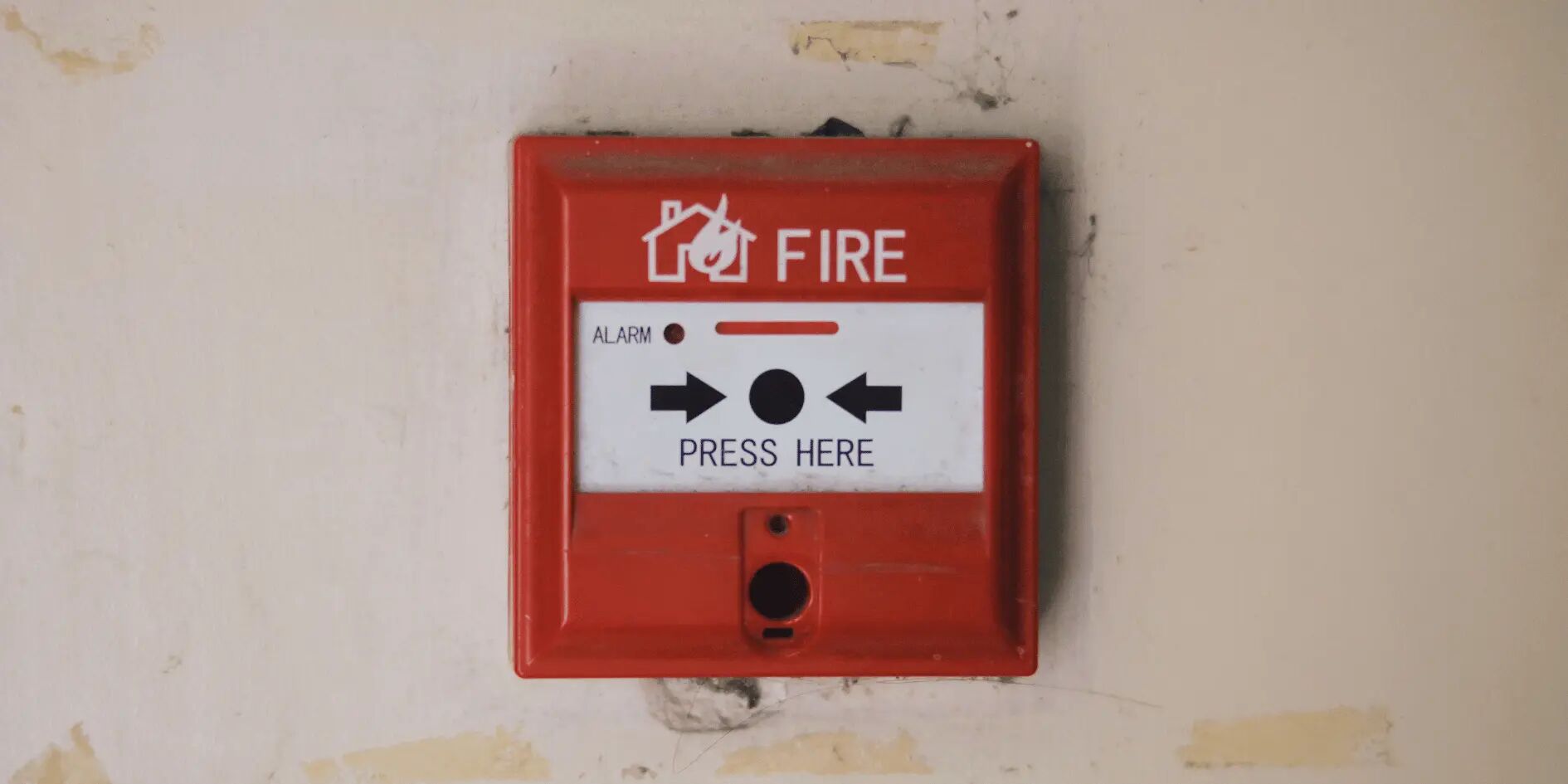
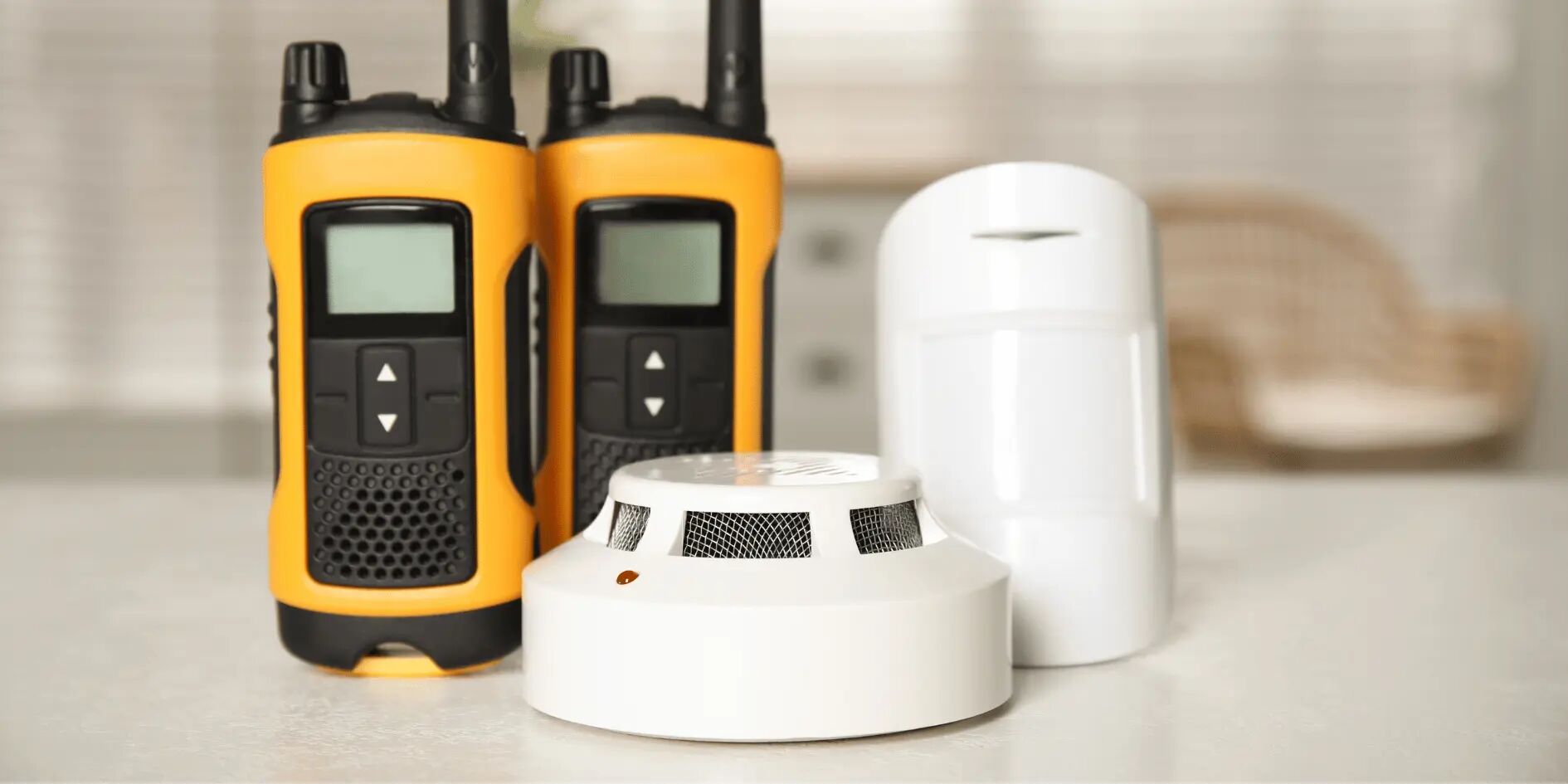
5. Keep the Fire Alarm System Switched On
A zone that is switched off after a false alarm is a common gap in residential buildings. IS 2189:2026 asks for a daily check of the alarm panel, so make sure of the following6:
- No switched-off zones on the panel
- The cause of every false alarm found and fixed
- Detectors not painted over during interior work
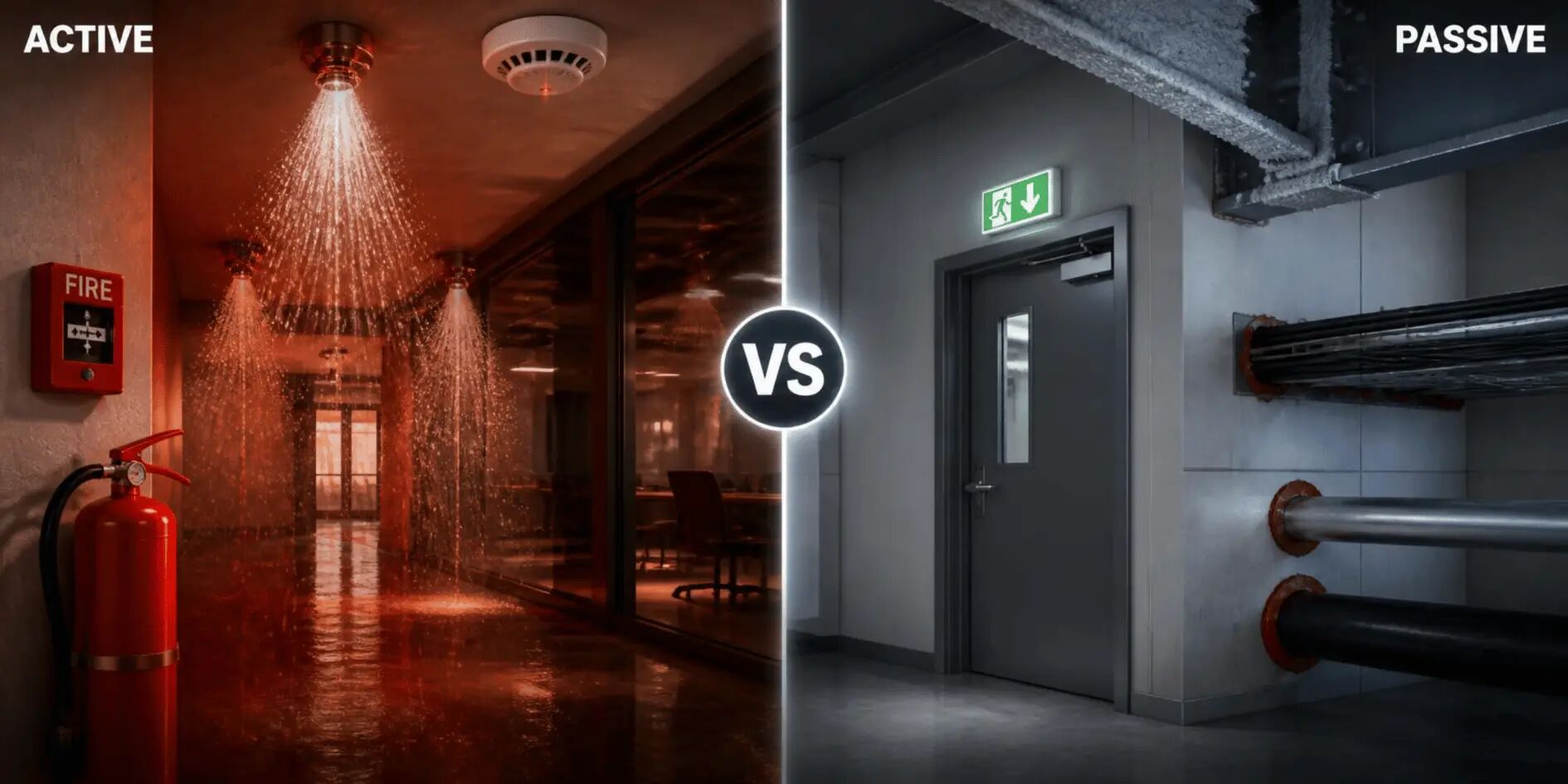
To learn more about these systems in detail, please read our article: Active Fire Protection System: Importance, Types, Laws in India.
6. Keep Fire Doors Closed and Shafts Sealed
The fire doors of the staircase and the lift lobby hold back the smoke only when they stay closed, and an unsealed shaft carries the smoke from one floor to the next. Check the following:
- Door closers working, with no wedges under the doors
- Holes made for new cables sealed with fire-rated sealant
7. Get the Common-Area Electrical Installation Checked
According to the BMC (Mumbai), 70 to 80% of city fires are caused by faulty electrical connections, and in a housing society, most of this risk sits in the meter room and the panels of the lifts and pumps.7 An electrical safety audit of the common areas checks the following:
- Loose or overheated joints, through a thermography audit
- Earth pit resistance, through earth pit testing
- A meter room which is kept dry and locked, with nothing stored inside it
8. Set Rules for EV and E-Bike Charging
E-bike and electric vehicle (EV) batteries can catch fire while charging, and such a fire is hard to put out. For new buildings, NBCS 2026 asks for sprinklers and heat detectors where EVs park in a basement or podium.1 Set the following rules:
- Charging only at points fitted by a licensed electrical contractor
- No e-bike charging in corridors or staircases
9. Train the Residents and Run a Mock Drill
Trained residents and security staff play a vital role in the first few minutes of a fire. The committee should arrange the following:
- An evacuation plan near the staircase on every floor
- Security guards trained to start the fire pump
- One mock drill every year
10. Keep the Records and Book a Fire Safety Audit at the Right Time
Keep all the fire safety records in one file, as the fire officer and the auditor will ask for the same. In Maharashtra, a fire safety audit is mandatory once every two years for residential buildings above 70 metres.3 That said, the experts at PowerTech say other societies should also book one at the following times:
- Before the society takes over the building from the builder
- After a fire or a near miss
- When the insurance company asks for an audit report
Common Fire Safety Mistakes in Housing Societies
In most cases, the fire safety gaps in a society come from small habits that nobody questions. Below are five common mistakes:
- Treating Form B as Paperwork: Some societies accept the certificate without an inspection, though Section 10(2) of the Act bars the agency from certifying systems that are not maintained.2
- Misusing the Fire Hoses: Washing cars with the hose reel or removing the nozzles leaves the system useless when a fire occurs, and it can count as tampering under Section 3(4).2
- Parking in the Fire Tender Path: Cars parked on the internal road can stop the fire engine from reaching the building.
- Locking the Terrace Door: A terrace door locked for security can trap the residents escaping the smoke, so keep its key in a break-glass box.
- Relying Only on the Fire Contractor: An annual maintenance contract covers only the work written in it, and the legal duty stays with the society, as we will discuss in the next section.
Who Is Responsible for Fire Safety in a Housing Society?
In India, the owner of the building is responsible for fire safety. The Maharashtra Fire Act also puts the same duty on the occupier when the owner is not traceable, and its definition of the owner includes both the registered co-operative housing society and the builder who sells the flats.2
- Managing Committee: Acts for the society once the building is handed over to it.
- Builder or Developer: Usually answers for the fire systems until the society takes over.
- Flat Owners and Tenants: Count as occupiers under the Act, and must not tamper with any fire equipment in the building.
To learn more about fire safety in detail, please read our article: What is Fire Safety? Meaning, Importance, Key Elements, Fire Safety Laws in India, and More.
Is Fire Safety Audit Mandatory for Housing Societies?
In Maharashtra, it depends on the building's height and use. Section 45A of the Maharashtra Fire Prevention and Life Safety Measures Act, 2006, as amended in 2023, requires the audit once every two years, and the Act works as follows:
- Who it covers: Residential buildings above 70 metres, and a tower above 30 metres with shops or offices, which may count as mixed occupancy.3
- Who conducts the audit: A Licensed Fire and Life Safety Auditor, and the qualified auditor named on the licence conducts it in person. PowerTech's licence number, for instance, is MF&ES/F&LSA/0029.
- What document needs to be submitted: A certificate in Form V, filed with the Chief Fire Officer.38
- What else applies: A fire officer or fire supervisor, and automated continuous monitoring of the firefighting systems.38
- Everyone else: Other societies have no audit mandate, though Form B still applies. Outside Maharashtra, the state's own fire laws apply.
Please note that the Act and its Rules changed in 2023 and 2025, and they can change again.
Form B Certificate vs. Fire Safety Audit
Form B and the fire safety audit are two different documents, and a residential building above 70 metres needs both of them.
Below is a quick comparison of the two documents:
| Document | Issued By | How Often | What it Proves | Who Needs It |
|---|---|---|---|---|
| Form B | Licensed Agency | Twice a year (January and July) | The fire systems were maintained | Every building the Act covers |
| Fire Safety Audit (Form V) | Licensed Fire and Life Safety Auditor | Once every two years | The whole building was evaluated in person | Residential buildings above 70 m |
One thing to note is that since June 2025, Form B covers the preceding six months.8
Penalties for Not Following Fire Safety Rules in a Housing Society
The fire brigade has strong powers under the Act. Under Sections 5 and 6, it can inspect a society and set a deadline to fix gaps; in cases of imminent danger, Section 8 allows the Chief Fire Officer to vacate and seal the building after cutting its water and power supply.2
Under Section 36, the following offences carry rigorous imprisonment of 6 months to 3 years and a fine of ₹20,000 to ₹50,000, plus up to ₹3,000 a day if the offence continues after conviction:2
- Not providing or maintaining the fire safety measures
- Ignoring the fire brigade's notice
- Tampering with the fire equipment, which is also a cognizable and non-bailable offence
Failure to submit Form B falls under Section 36(2), with the same term of imprisonment and a fine.2
Conclusion
In general, the most important rules are also the easiest ones to follow. A clear staircase and a fire pump in auto mode can save lives in the first few minutes of a fire, and the Form B filed every January and July keeps the society in line with Section 3(3) of the Act. Such rules save money as well. The society avoids the penalties under Section 36 and the much higher cost of repairs after a fire.
A fire safety audit plays a vital role here, as a licensed auditor tests every system in the building and gives the committee a priority-wise report of the gaps. PowerTech, headquartered in Pune with offices in Mumbai and Nashik, has conducted safety and energy audits for housing societies and industrial plants since 2014. We hold the Fire and Life Safety Auditor licence MF&ES/F&LSA/0029. Contact our team of licensed auditors today to know where your society stands on these ten rules and what it needs to fix first.
References
- (2026). National Building Construction Standards, NBCS 2026 (SP 7:2026), Part F: Fire and Life Safety. Bureau of Indian Standards (copy hosted by the Directorate of Fire and Emergency Services, Goa). https\://dfes.goa.gov.in/wp-content/uploads/2026/05/sp7_2026_nbcs-212-1480.pdf
- (2023). The Maharashtra Fire Prevention and Life Safety Measures Act, 2006 (Mah. III of 2007), as amended. Directorate of Maharashtra Fire and Emergency Services. https\://mahafireservice.gov.in/directorate/fire-act/2006/Maharashtra%20Fire%20Prevention%20and%20Life%20Safety%20Measures%20Act,%202006..pdf
- (March 23, 2023). L. A. Bill No. X of 2023, The Maharashtra Fire Prevention and Life Safety Measures (Amendment) Bill, 2023, as passed by the Legislative Assembly. Maharashtra Legislature Secretariat. https\://mls.org.in/assembly-bill/2023/one-house/Bill%20no%2010%20English%20One%20House.pdf
- (2003). IS 15301:2003, Installation and Maintenance of Fire Fighting Pumps, Code of Practice. Bureau of Indian Standards (Public Resource copy). https\://archive.org/details/gov.in.is.15301.2003
- (2024). IS 2190:2024, Selection, Installation and Maintenance of First-Aid Fire Extinguishers, Portable and Mobile, Code of Practice (Fifth Revision). Bureau of Indian Standards. https\://services.bis.gov.in/php/BIS_2.0/bisconnect/knowyourstandards/Indian_standards/isdetails/MzIyMDU=
- (March 2026). IS 2189:2026, Selection, Installation and Maintenance of Automatic Fire Detection and Alarm System, Code of Practice (Fifth Revision). Bureau of Indian Standards (copy hosted by the National Safety Council of India). https\://nsc.org.in/assets/img/safetyconnect/pdf/FIRE-DETECTORS.pdf
- (January 19, 2022). Mumbai: Short circuit caused 75% of fires over past five years, says Fire Brigade chief Hemant Parab. Free Press Journal. https\://www.freepressjournal.in/mumbai/mumbai-short-circuit-caused-75-of-fires-over-past-five-years-says-fire-brigade-chief-hemant-parab
- (June 12, 2025). The Maharashtra Fire Prevention and Life Safety Measures (Amendment) Rules, 2025. Urban Development Department, Government of Maharashtra (copy hosted by the Directorate of Maharashtra Fire and Emergency Services). [https\://mahafireservice.gov.in/directorate/fire-act/2025/Act%20to%20Rules%20(Amended)%20English.pdf](https://mahafireservice.gov.in/directorate/fire-act/2025/Act%20to%20Rules%20(Amended)%20English.pdf)
Leave a Reply
Your email address will not be published. Comments appear after we have approved them. Required fields are marked *.