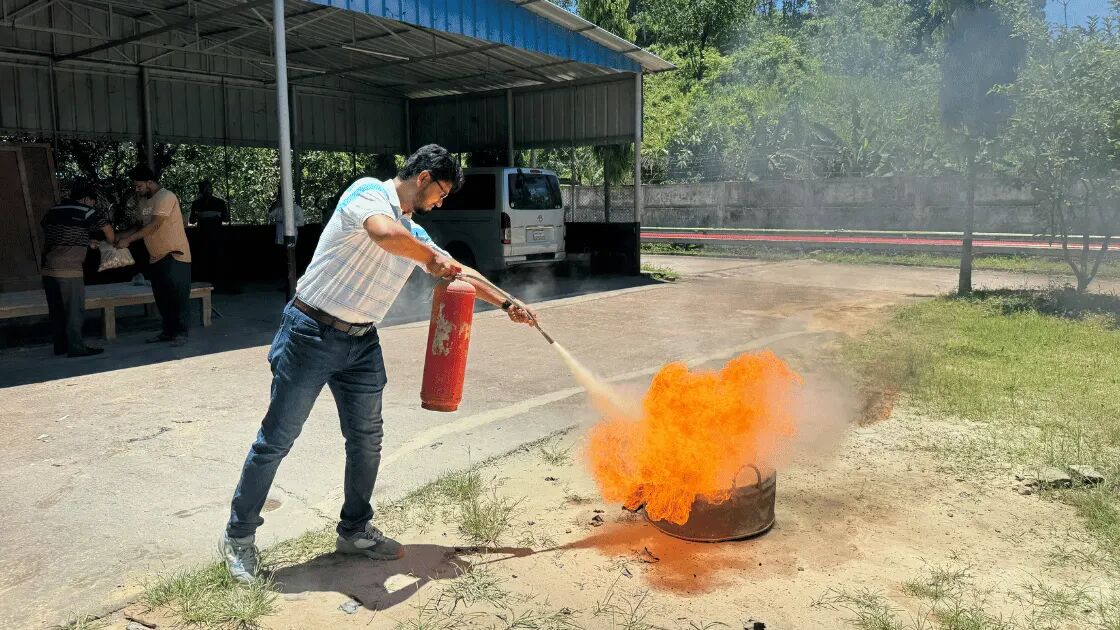


A fire protection system is essential in facilities with high occupancy. These systems are classified as active or passive. Active fire protection detects, alerts, and suppresses fires using components like detectors and sprinklers. Unlike fire-rated walls and doors, active systems require a trigger or human intervention. In India, the National Building Code of India, NBCS 2026 (SP 7:2026), specifies systems a building must have, and the state fire laws hold the building owners responsible for their maintenance.1, 2
In this article, we will discuss Active Fire Protection Systems in detail. Let us understand the most common active fire protection components, how they are maintained and tested, and the laws and standards that apply in India.
What is Active Fire Protection?
Active fire protection, also known as AFP, is the part of a fire safety program that has to act once a fire starts. It detects the fire, warns the occupants, and fights it until the fire brigade arrives. Such systems mainly include detectors and alarms, sprinklers, hydrants, extinguishers, and special suppression systems for areas such as server rooms, transformers, and fuel stores. Each depends on power, water, or a person. That's why they are called active.
The law expects every component of an active fire protection system to work at all times.2 In Maharashtra, the Maharashtra Fire Prevention and Life Safety Measures Act, 2006, as amended in 2023, and its Rules, amended in June 2025, expect more than that.4, 5
- For the buildings listed under Section 45, Section 3(3A) requires the firefighting systems to be connected to an IoT-based automated continuous monitoring system (ACMS) that reports the condition of the pumps, tanks, risers, and alarm panel to the owner and the licensed agency.4, 5
- Next, Section 45A requires an audit by a Licensed Fire and Life Safety Auditor, who must test every active measure in the building. Licensed auditors like PowerTech conduct this Fire Safety Audit.2, 5
How Active Fire Protection Systems Detect, Alert, and Fight a Fire
A fire inside a building stays small for only a few minutes. In that window, the smoke is thin, the heat is local, and one person with an extinguisher can still end it. In general, active fire protection works in three steps:
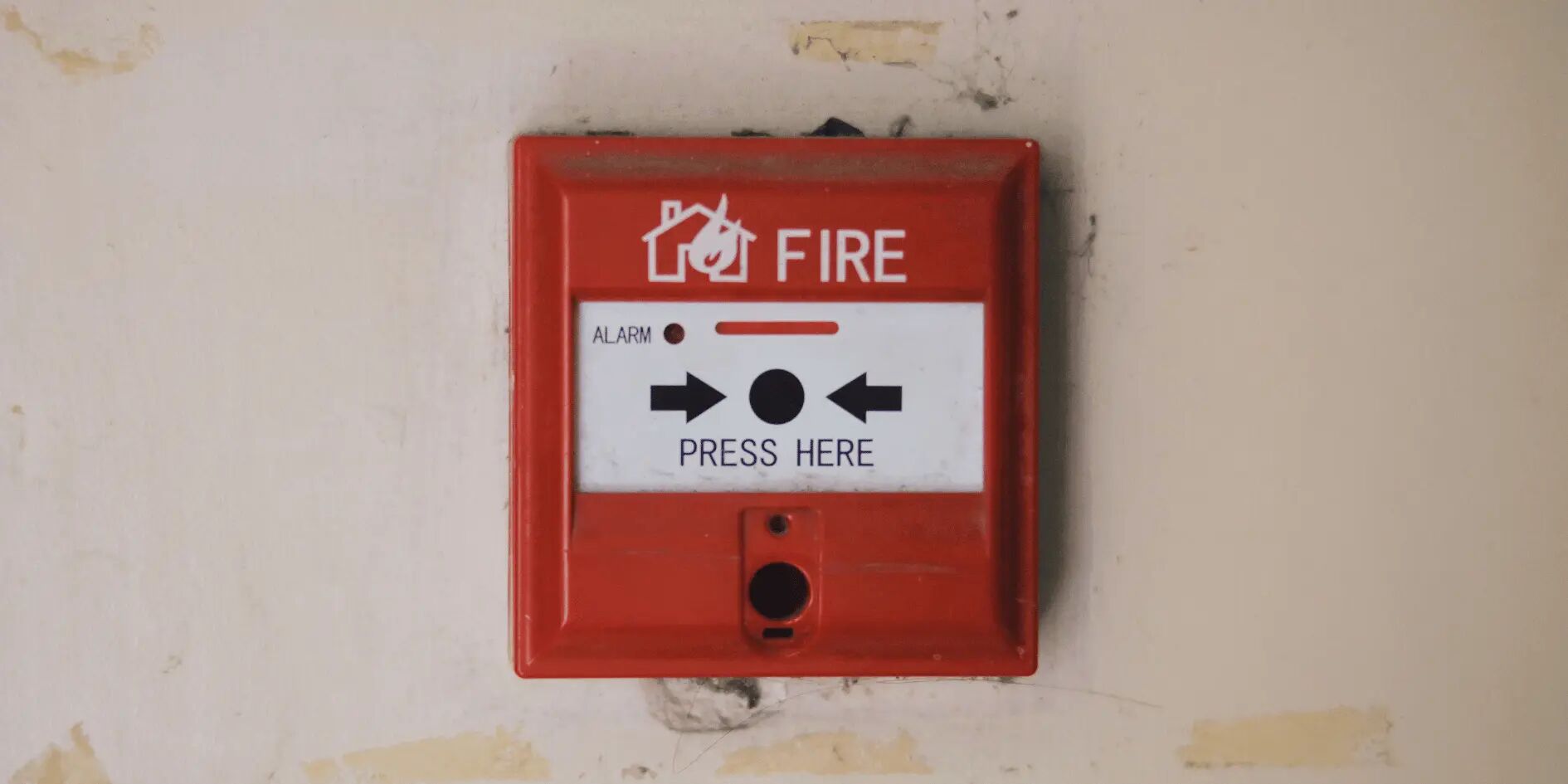
- Detect: A smoke or heat detector senses the fire, or a person breaks the glass of a manual call point.
- Alert: The fire alarm panel sounds the hooters, plays the evacuation message, and shows the zone where the fire is.
- Fight: The occupants use the extinguishers and hose reels, the sprinkler head above the fire opens on its own, and the hydrants give the fire brigade water at pressure.
The three steps work as a chain. The detector reports to the panel, the panel raises the alarm, and the alarm starts the evacuation and the response at the same time. On the water side, the chain runs on pressure. When a sprinkler head or a hydrant valve opens, the pressure in the riser drops, and the pumps start on their own to restore it. As per IS 15301, the main pump stops only by a manual push button, so it keeps running until someone decides the fire is out.
Types of Active Fire Protection Systems
Most Indian buildings and factories rely on the following six types of active fire protection systems. The National Building Code of India, NBCS 2026 (SP 7:2026), decides in Part F which of them a building must have, and the Indian Standards named below decide how each one is built and kept.1
1. Fire Detection Systems
The fire detection system is the building's early warning. It senses smoke, heat, or flame and passes the signal to the alarm panel; IS 2189 covers its design, siting, and upkeep, and the components are made to the IS/ISO 7240 series.7, 8 Below are its main components:
- Smoke detectors (optical or multi-sensor) on the ceiling of every room, corridor, and void
- Heat detectors in kitchens, pantries, DG rooms, and other places where smoke is normal
- Flame detectors for high or open spaces such as warehouses and hangars
- Beam and aspirating detectors for atriums, tall halls, and server rooms
- Linear heat sensing cables in cable trays, tunnels, and conveyors
- Manual call points within 30 m of any person, fixed at 1.4 m above the floor
2. Fire Alarm Systems
The fire alarm system turns a detection signal into action. Its heart is the control and indicating panel, selected and maintained under IS 15908, which shows the zone in alarm and drives everything else.8 Below are its main components:
- The fire alarm control panel, with a repeater panel near the main entrance
- Standby batteries that keep the panel alive through a power failure
- Hooters and sounders that can be heard in every occupied room, and above sleeping heads in hotels and hospitals
- The public address and talk-back system for the evacuation message
- Response indicators outside closed rooms and cabins
- The interface that starts the fans, closes the dampers, and releases the gas suppression
- In Maharashtra, the ACMS gateway that reports the panel, battery, and call point status to the owner and the licensed agency
3. Automatic Sprinkler Systems
The sprinkler system is the only one that fights the fire with nobody present. Each head opens on its own when the heat above the fire reaches its rating, and only the heads over the fire open. IS 15105 covers the design and installation, and IS 9972 covers the heads.9, 10 Below are its main components:
- Sprinkler heads (pendent, upright, or sidewall) with a glass bulb or fusible link
- The pipe network of mains, range pipes, and risers, kept charged under pressure
- The installation control valve with its alarm valve and water motor gong
- Flow switches and pressure switches that signal the panel and start the pumps
- The dedicated sprinkler pump and its water storage
- Zone isolation valves, and drain and test valves on each floor
4. Fire Hydrant Systems
The hydrant system is the main weapon of the fire brigade and the trained occupant. It is a network of charged pipes with outlets on every floor and around the building, covered by IS 3844 inside the building and IS 13039 in the yard.11, 12, 13 Below are its main components:
- Internal hydrants (wet risers) with a landing valve on every floor
- Yard hydrants at intervals around the building and the plant
- First-aid hose reels to IS 884, tapped from the riser, for one-person use
- Hose boxes with delivery hoses, branch pipes, and nozzles at every landing valve
- The fire brigade inlet at ground level, to feed the risers from a fire tender
- The pumps and the fire water tank that keep the system under pressure, which we discuss in the pump house section
5. Fire Extinguishers
Extinguishers are the first-aid firefighting appliances for a fire in its first minute, used by whoever is nearest. IS 2190 covers their selection, placement, and maintenance, and IS 15683 and IS 16018 cover the portable and wheeled units themselves.14 Below are the main types:
- Water type for Class A fires in wood, paper, textiles, and plastics
- Foam type for Class A and Class B fires, including flammable liquids
- ABC dry powder for Class A, B, and C fires, the usual all-round choice
- Carbon dioxide (CO2) for live electrical equipment, leaving no residue
- Clean agent for sensitive electronics, archives, and control rooms
- Special dry powder for Class D metal fires, and wet chemical for Class F cooking oil fires
- Wheeled units for high-hazard areas that need a higher flow and a longer discharge
6. Special Fire Suppression Systems
Some risks cannot wait for a person or cannot take water. Such areas get a fixed system of their own, released by the detection system, and each has its own Indian Standard.8, 15, 16 Below are the main ones:
- Clean agent and inert gas systems for server rooms, data centers, and panel rooms, under IS 15493, with upkeep under IS 15496
- High and medium velocity water spray for transformers, cable cellars, and flammable liquid tanks, under IS 15325
- Deluge systems with open nozzles for high-hazard process areas, under IS 15325
- Low expansion foam systems for fuel stores, tank farms, and loading bays, under IS 12835 (Part 1)
- Wet chemical systems over commercial kitchen hoods, for cooking oil fires
- Tube-based suppression fitted inside electrical panels and machine enclosures
Automatic vs. Manual Fire Protection Systems
Active systems are also divided by what triggers them.
Automatic Fire Protection System
Automatic systems act on their own. Such systems mainly include detectors, sprinklers, gas suppression, deluge, and pumps. Heat, smoke, or pressure triggers them, so they continuously work even at 2 a.m. at night when there is no one in the warehouse.
Their weak point is the setting. For instance, consider a detector isolated at the panel or a pump left on manual after a service visit; it looks automatic but is not.
Manual Fire Protection System
Manual systems need a person. Extinguishers, hose reels, hydrants, and manual call points belong here. Their weak point is the person, who must be present, trained, and calm.
The difference is simple: automatic systems cover the minutes when nobody is around, whereas manual systems cover the fire that a person can still reach. In Maharashtra, the ACMS now watches the automatic side round the clock, but it monitors the systems; it does not fight the fire.5
The Fire Pump House and Water Supply
Every water-based system in this article ends at the pump house. It holds the fire water tank, the jockey pump, the main electric pump, and the diesel standby, fed by an electric supply independent of the rest of the building under IS 15301.6 Each pump starts on its own when the pressure drops, and the tank is sized in compliance with the building's occupancy and height.1, 6
Conclusion: Key Things to Keep in Mind
Active fire protection works only when something triggers it, so buying the systems is half the job. Keep a few things in mind.
- The code decides what your building needs; the National Building Code of India, NBCS 2026 (SP 7:2026), sets the list in Part F by occupancy, height, and area.1 The Indian Standards decide how each system is built and how often it is tested, right from the weekly detector test under IS 2189 to the daily pump run under IS 15301 and the 90-day extinguisher check under IS 2190.6, 7, 14
- Every system depends on power, water, or a person, so the standby batteries, the tank level, and the training count as much as the equipment.
- Automatic systems stay automatic only while their settings are right, and manual systems are only as good as the nearest trained person.
As such, judge your protection by the date of its last test, not by the installation certificate or the AMC invoice, and start every check in the pump house.
PowerTech is an independent fire, electrical, and energy audit firm headquartered in Pune, and we have been in the audit business since 2014. We hold a Fire & Life Safety Auditor license MF&ES/F&LSA/0029, and the qualified auditor named on the license conducts every fire audit in person. Contact us if you need any assistance setting up fire protection systems and ensuring compliance.
References
- (April 30, 2026). National Building Construction Standards 2026 (SP 7:2026), Part F: Fire and Life Safety. Bureau of Indian Standards (copy hosted by the Directorate of Fire and Emergency Services, Goa). https://dfes.goa.gov.in/wp-content/uploads/2026/05/sp7_2026_nbcs-212-1480.pdf
- (2023). The Maharashtra Fire Prevention and Life Safety Measures Act, 2006 (Mah. III of 2007), as amended. Directorate of Maharashtra Fire and Emergency Services. https://mahafireservice.gov.in/directorate/fire-act/2006/Maharashtra%20Fire%20Prevention%20and%20Life%20Safety%20Measures%20Act,%202006..pdf
- (October 2024). Mumbai: '70% Of Fire Incidents Attributed To Faulty Electrical Infrastructure'. Free Press Journal. https://www.freepressjournal.in/mumbai/mumbai-70-of-fire-incidents-attributed-to-faulty-electrical-infrastructure-says-fire-and-security-association-of-india
- (May 11, 2023). The Maharashtra Fire Prevention and Life Safety Measures (Amendment) Act, 2023 (Mah. XXIV of 2023). Maharashtra Government Gazette, via the Directorate of Maharashtra Fire and Emergency Services. https://mahafireservice.gov.in/directorate/fire-act/2023/English.pdf
- (June 12, 2025). The Maharashtra Fire Prevention and Life Safety Measures (Amendment) Rules, 2025, Notification No. MFS-2023/C.R.370/UD-14. Urban Development Department, Government of Maharashtra, via the Directorate of Maharashtra Fire and Emergency Services. [https://mahafireservice.gov.in/directorate/fire-act/2025/Act%20to%20Rules%20(Amended)%20English.pdf](https://mahafireservice.gov.in/directorate/fire-act/2025/Act%20to%20Rules%20(Amended)%20English.pdf)
- (2003). IS 15301:2003, Installation and Maintenance of Fire Fighting Pumps, Code of Practice. Bureau of Indian Standards (Public Resource copy). https://archive.org/details/gov.in.is.15301.2003
- (2008). IS 2189:2008, Selection, Installation and Maintenance of Automatic Fire Detection and Alarm System, Code of Practice (Fourth Revision). Bureau of Indian Standards (Public Resource copy). https://archive.org/details/gov.in.is.2189.2008
- (2025). Programme of Work, CED 22: Fire Fighting. Bureau of Indian Standards. https://www.services.bis.gov.in/php/BIS_2.0/bisconnect/pow_new/Pow/download_pow_pdf_dept_commtt/63/202/
- (2021). IS 15105:2021, Design and Installation of Fixed Automatic Sprinkler Fire Extinguishing Systems, Code of Practice (First Revision). Bureau of Indian Standards (Public Resource copy). https://archive.org/details/gov.in.is.15105.2021
- (2023). IS 9972:2023, Automatic Sprinkler Heads for Fire Protection Service, Specification. Bureau of Indian Standards (Public Resource copy). https://archive.org/details/gov.in.is.9972.2023
- (1989). IS 3844:1989, Code of Practice for Installation and Maintenance of Internal Fire Hydrants and Hose Reels on Premises (First Revision). Bureau of Indian Standards (Public Resource copy). https://law.resource.org/pub/in/bis/S03/is.3844.1989.html
- (2024). Published Standards: Fire Fighting (CED 22), IS 13039:2014 and IS 3844:1989 reaffirmations. Bureau of Indian Standards. https://www.services.bis.gov.in/php/BIS_2.0/dgdashboard/published/sub_sub_grp_stn_list/138
- (1985). IS 884:1985, Specification for First-Aid Hose-Reel for Fire Fighting (First Revision). Bureau of Indian Standards (Public Resource copy). https://law.resource.org/pub/in/bis/S03/is.884.1985.pdf
- (2024). IS 2190:2024, Selection, Installation and Maintenance of First-Aid Fire Extinguishers, Portable and Mobile, Code of Practice (Fifth Revision). Bureau of Indian Standards. https://services.bis.gov.in/php/BIS_2.0/bisconnect/knowyourstandards/Indian_standards/isdetails/MzIyMDU=
- (2020). IS 15325:2020, Design and Installation of Fixed Automatic High and Medium Velocity Water Spray System, Code of Practice (First Revision). Bureau of Indian Standards. https://www.services.bis.gov.in/php/BIS_2.0/bisconnect/standard_review/Standard_review/Isdetails?ID=NzQwNA%3D%3D
- (2021). IS 12835 (Part 1):2021, Design and Installation of Fixed Foam Fire Extinguishing System, Code of Practice, Part 1: Low Expansion Foam. Bureau of Indian Standards (Public Resource copy). https://archive.org/details/gov.in.is.12835.1.2021
Leave a Reply
Your email address will not be published. Comments appear after we have approved them. Required fields are marked *.