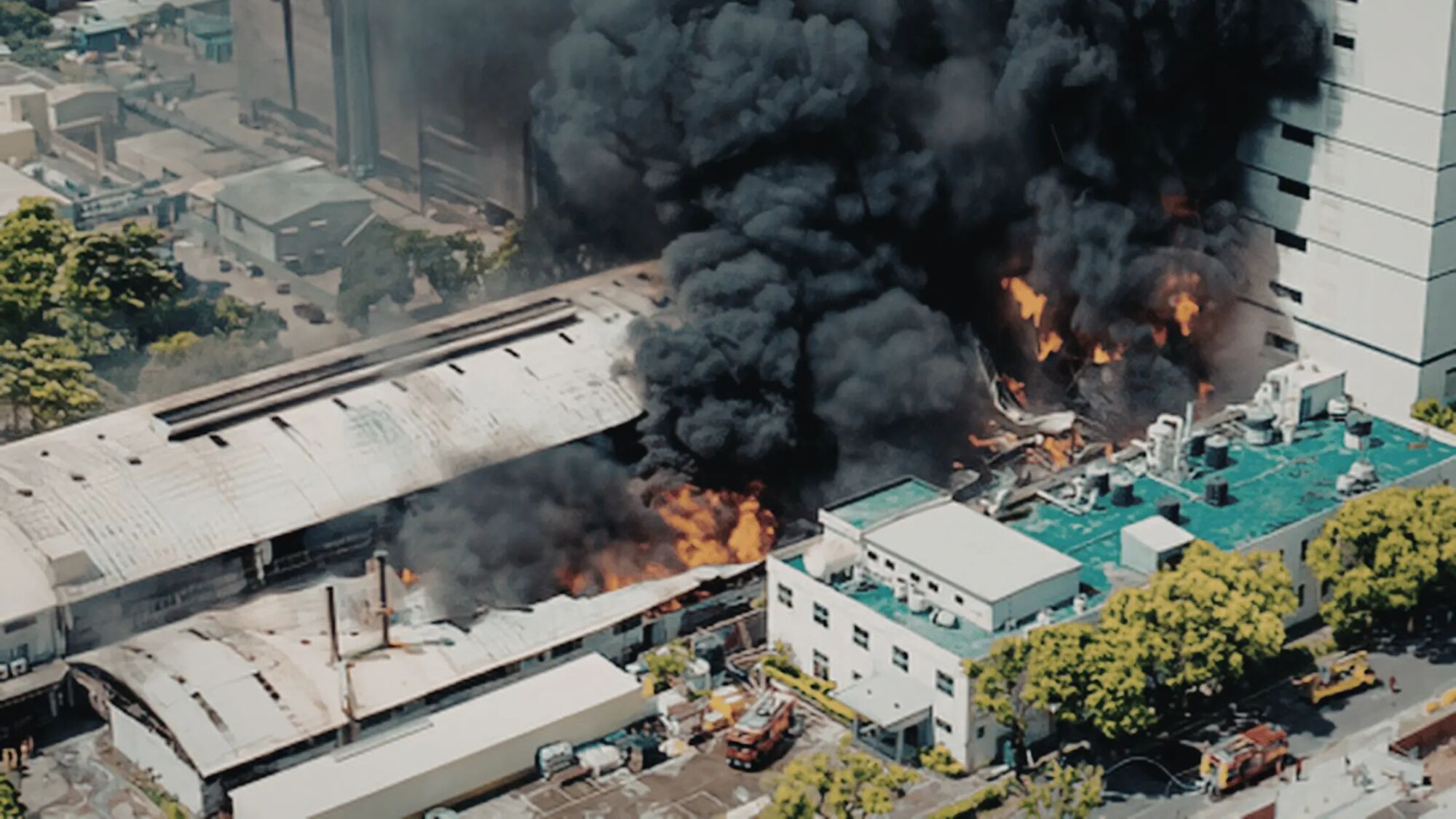



Fire safety is a set of practices and procedures to prevent or limit fires. Such measures are imposed by law to protect people and property. The National Building Code of India 2016 sets the standard, and in Maharashtra, the Maharashtra Fire Prevention and Life Safety Measures Act, 2006 places the responsibility on the building owner. All housing societies and facilities where a large number of people gather daily are bound to install reliable fire detection and prevention systems. For example, facilities such as IT offices, medium- and large-scale organizations, factories, and industries.
In this article, we will discuss Fire Safety in India in detail. We will first understand what it means and why it matters. Then, discuss its three elements, active and passive fire protection, the common causes of fire, and the laws that apply in India. Our goal is to help you decide whether your facility needs a fire safety audit or not.
What is Fire Safety?
Fire safety safeguards all areas of the building or facility from potential fire hazards. It is also known as fire and life safety, including a set of measures to follow for stopping a fire from starting, limiting its spread if it starts, and getting every occupant out safely.
It is more than just having fire extinguishers or smoke detectors installed at various places. According to the BMC (Mumbai), 70 to 80% of city fires are caused by faulty electrical connections, and a loose joint inside a panel looks normal until it fails.12 That's why the law treats fire safety as a strict duty.
Below are the key components of fire safety as per the Indian government:
- Prevention keeps the ignition sources and the fuel apart.
- Detection raises the alarm at the first trace of smoke.
- Suppression holds the fire at its point of origin.
- Compartmentation and escape routes keep the occupants ahead of the smoke until they reach open air.
Under Section 45A of the Maharashtra Fire Prevention and Life Safety Measures Act, 2006, a fire audit must be conducted by a Licensed Fire and Life Safety Auditor. The Directorate of Maharashtra Fire & Emergency Services issues this licence. Licensed auditors like PowerTech hold it, and the audit we conduct covers the building structure, the fire systems and the escape routes together.
The Importance of Fire Safety for Buildings and Facilities
Every building carries a fire risk, whether it is a high-rise tower or a single-shed factory.3 The most common fuels for fire are already inside:
- The furniture
- The stock
- The cable insulation
- The false ceiling
- The waste behind the store room
All that a fire needs is a source of heat and a few minutes to spread without anyone even noticing. Once it starts, the smoke moves faster than the people. It arrives before the flame, fills the corridor and the staircase, and takes away visibility. Occupants who could have walked out calmly now cannot find the door. One can say the escape routes are what the occupants need most, and they are the first thing the smoke takes away.
Impact on Building Owners
For the owner, the loss continues after the fire is out. A burnt panel room can idle a plant for weeks. The insurer often asks for the maintenance records and the last audit report before settling the claim. The fire officer can issue a notice, and in Maharashtra, a building that the Maharashtra Fire Act covers answers to the fire authority as well.
That's why fire safety is a management responsibility, not a housekeeping task. The cost of keeping the systems in working order is small and predictable. The cost of a fire is neither.
Fire Safety Laws and Standards in India
Fire safety in India works at two levels. A national code sets the standard, and the state laws make it enforceable.
The National Building Code of India 2016
Part 4 of the Code, titled Fire and Life Safety, is the technical reference for the whole country. It lays down what a building of a given height and occupancy must have:
- The fire zones
- The escape routes
- The fire resistance of the structure
- The detection, alarm and firefighting systems
The Code becomes binding when a state adopts it through building bye-laws and fire rules. Most states issue the fire NOC against it.
The State Fire Acts / Maharashtra Fire Safety Act
Each state has its own fire services law. In Maharashtra, it is the Maharashtra Fire Prevention and Life Safety Measures Act, 2006. For fire safety audits, the Act works as follows:
- Who it covers: High-rise buildings above 30 metres and occupancies such as hotels, hospitals, business and IT offices, malls, commercial complexes and mixed-occupancy buildings.
- Who conducts the audit: As per Section 45A, a Licensed Fire and Life Safety Auditor, licensed by the Directorate of Maharashtra Fire & Emergency Services. The licence sits with a firm, but a named qualified auditor personally conducts the audit and signs the certificate. PowerTech, for example, holds licence no. MF&ES/F&LSA/0029.
- Who is responsible: The owner of the building; the occupier or the management if the owner is not available.
- What document needs to be submitted: The auditor's certificate in Form V, submitted to the fire authority: the Director of Maharashtra Fire Services, the Chief Fire Officer or the Nominated Officer.
- Everyone else: for buildings outside this list, and everywhere outside Maharashtra, the Section 45A audit does not apply. But it remains strongly advisable, as it is often the first document an insurer or a fire officer asks for after an incident.
Other Acts and rules
Each of the following adds duties for the owner or the occupier; none of them replaces the Code.
- The Factories Act and the state Factories Rules for factories
- The Shops and Establishment Act for offices and shops
- The municipal building bye-laws, and the conditions written into the fire NOC.
Please note that the thresholds, the forms and the deadlines are set under the Act and its Rules and get amended from time to time. Check the current rules or ask a licensed auditor before relying on a summary, including this one.
Who Is Responsible for Fire Safety in a Building?
In India, all states hold the building owner responsible for fire safety. Where the owner is not available, the occupier or the management answers for it. In any case, the agency that installs the fire safety systems is not held responsible.
- Housing Societies: The managing committee, which acts for the society.
- Factories, Hotels, Hospitals, and Offices: The management that controls the premises.
- Leased Premises: Usually the owner for the shared systems (pumps, hydrants, alarm panel, staircases) and the tenant for the arrangements inside the leased area. The lease usually records who maintains what, so read it before assuming.
Is the Annual Maintenance Contractor Responsible for Fire Safety?
One more important thing to note is that an annual maintenance contract (AMC) with a fire contractor does not transfer the responsibility. The contractor maintains the systems; the owner remains answerable for their condition. Similarly, a licensed auditor clearly specifies the fire safety equipment condition on the day of the audit. And, acting on the findings stays with the owner only.
Fire Safety vs. Fire Prevention
Fire prevention is an aspect of fire safety. It deals with fires before they exist. Its main purpose is to keep the ignition sources and the fuel apart. It includes:
- Properly installed and maintained wiring
- Controlled hot work
- Safe storage of flammables
- Clean housekeeping
- Trained staff
However, prevention alone cannot promise that a fire will never start. A cable ages, a contractor takes a shortcut, a heater is left on overnight.
So, we need a complete fire safety system that assumes that a fire will start one day and prepares the building for that day through various things like detection, suppression, compartmentation, and escape routes. One can say that prevention lowers the odds of a fire, whereas fire safety limits the damage when the odds run out.
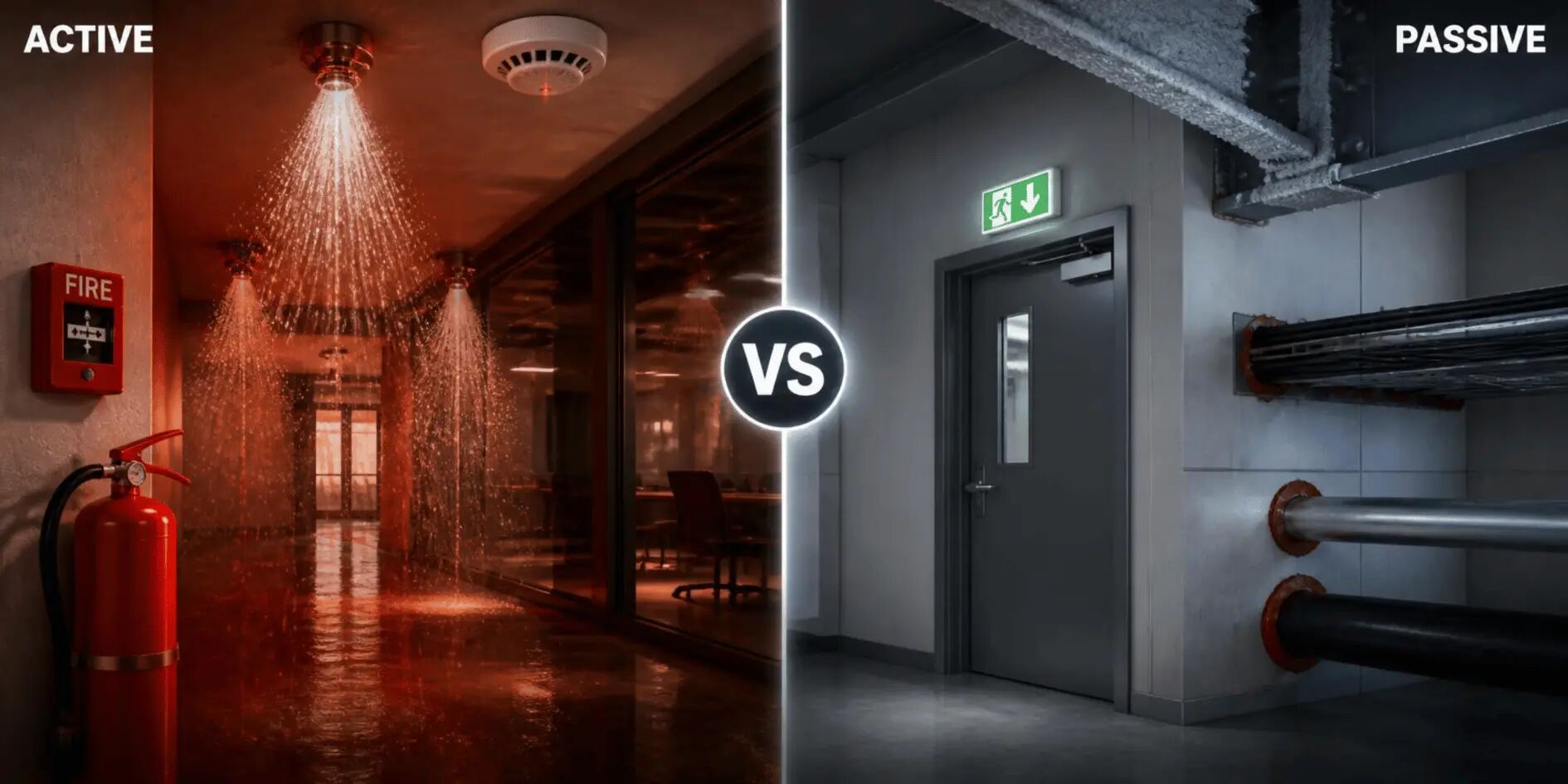
Active vs. Passive Fire Protection
Acitve Fire Protection
Active fire protection is nothing but the set of systems and processes that are useful when a fire starts. It detects, alarms, and fights.
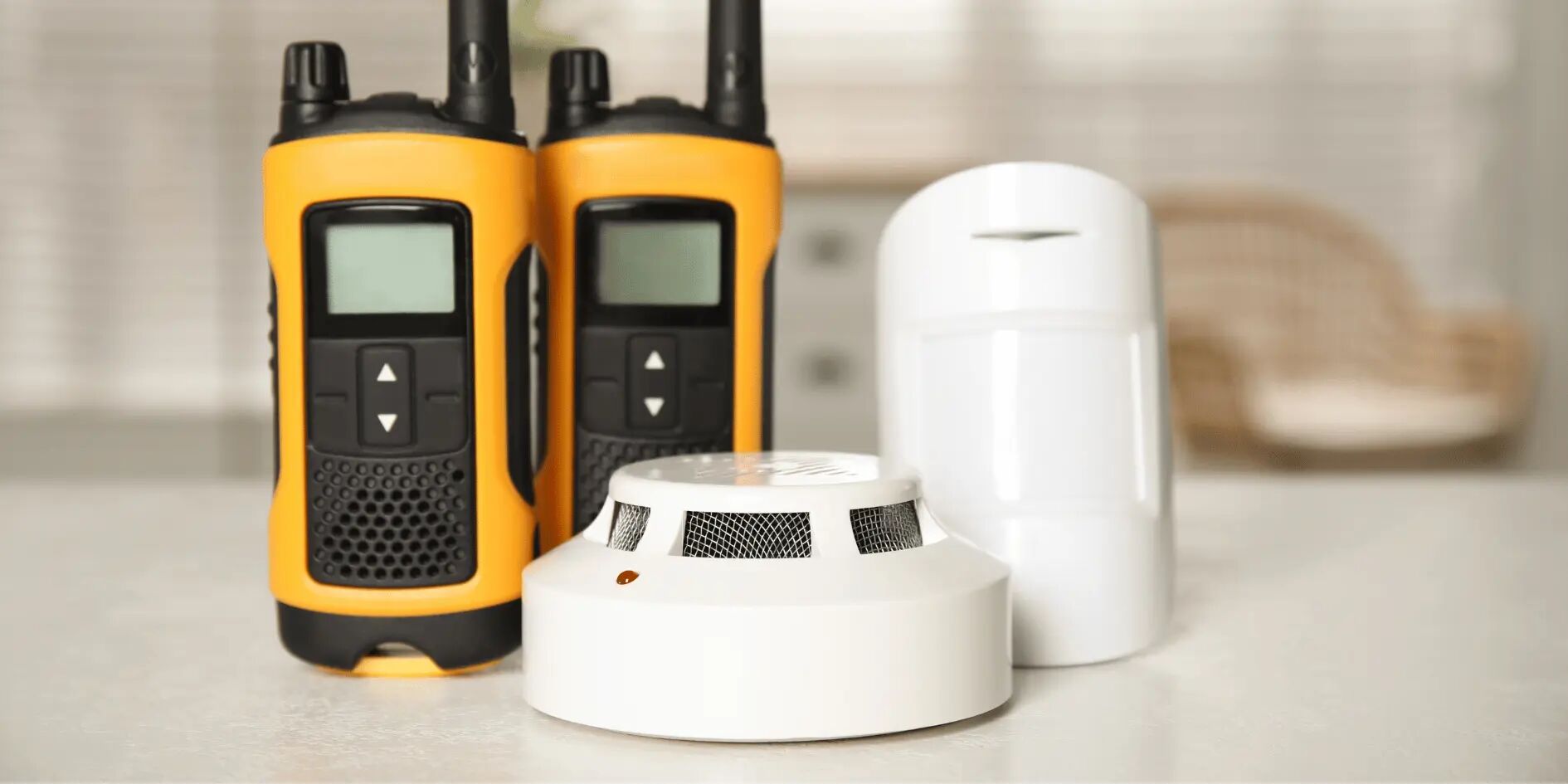
Such systems mainly include smoke and heat detectors, alarm panels, sprinklers, hydrants and hose reels, the extinguishers and the gas-based suppression in a server room. Most of them need power, water or a person to work. An alarm that is switched off manually for some reason does nothing on the day it matters. In short, these systems need to be maintained regularly and kept turned on.
Passive Fire Protection
Passive fire protection is built directly into the structure and needs no trigger at all. The fire-rated walls and floors divide the building into compartments, the fire doors hold the smoke back, and the sealed shafts stop the fire from climbing floor to floor. An unsealed shaft, on the other hand, carries the smoke upward like a chimney.
The difference is simple: active protection fights the fire, whereas passive protection contains it. A working hydrant gives the occupants a fighting chance; a closed fire door gives them the time to use it. We cover these systems in detail later.
Common Causes of Fire Accidents in India
Most fires in Indian buildings and factories are caused by the following five reasons.
1. Electrical Faults
As we discussed at the beginning of this article, the BMC attributes 70 to 80% of city fires in Mumbai to faulty electrical connections.4 In reality, electrical installations get so much attention during audits conducted by government-licensed auditors like PowerTech.
A quick example would be a loose termination or an overloaded circuit. It runs a little hotter with every month of load. The insulation hardens, cracks and finally arcs, and the dust or the cable bundle next to it catches fire.
No doubt, electrical faults are the most common cause of fire accidents on record, but they are also the most preventable one. For example, electrical safety auditors detect hot joints using a thermal imager long before they ignite.
2. Hot Work and Process Heat
Welding, gas cutting and grinding throw sparks and molten metal several metres from the job. In case of factories, this becomes a serious issue due to furnaces, boilers, ovens, and dryers.5 A spark on packaging waste or a solvent rag needs only minutes to become a fire.6
The risk peaks during maintenance and fit-out work, when a contractor works without a hot-work permit and completely ignores a fire watch or an extinguisher within reach.
3. Flammable Storage and Poor Housekeeping
Paints, thinners, solvents, LPG cylinders, diesel for the diesel generator (DG) set, and also the piles of cardboard, cotton or plastic waste directly contribute to fire hazards. When stored in the open, next to a panel or inside a stairwell, they turn a small fire into a large one within minutes.
Poor housekeeping adds a second problem. In most cases, the waste blocks the escape routes and the access to the hydrants and extinguishers. The fire load of a building is a choice, and a weekly walk-round keeps it small.
4. Kitchens and LPG
Commercial kitchens in hotels, hospitals, hostels and canteens put open flames, hot oil and LPG in one room. Grease builds up inside the exhaust hoods and ducts and burns fiercely once it catches. In a housing society, the risk moves into the flats, where an ageing regulator, a cracked rubber tube or a cylinder kept on the balcony leaks slowly into a closed kitchen.
Generally, an LPG fire usually gives a warning; the smell comes before the flame.7
5. Maintenance Lapses and Human Error
Strictly speaking, a maintenance lapse does not start a fire; it lets a small one grow. For example,
- The extinguisher is past its refill date
- The hydrant pump does not start
- The smoke detector was bypassed after a false alarm
- The fire door is wedged open
A quick list of human errors that start fires is as follows:
- A cigarette in a storeroom
- An overloaded extension board
- An iron or a room heater left on
- Festival lamps and incense near curtains
We at PowerTech say none of the above calls for a new system; instead, they call for a habit of checking.
Key Elements of Fire Safety
We have discussed fire prevention so far. It deals with the fire that has not started. The three elements that we are about to discuss deal with the one that has already started and is spreading fiercely. Each element aims to answer one question: is there a fire, can we hold it, and can everyone get out?
A building is fire safe only when all three answers are yes on every floor and on any given day.
1. Fire Detection and Alarm Systems
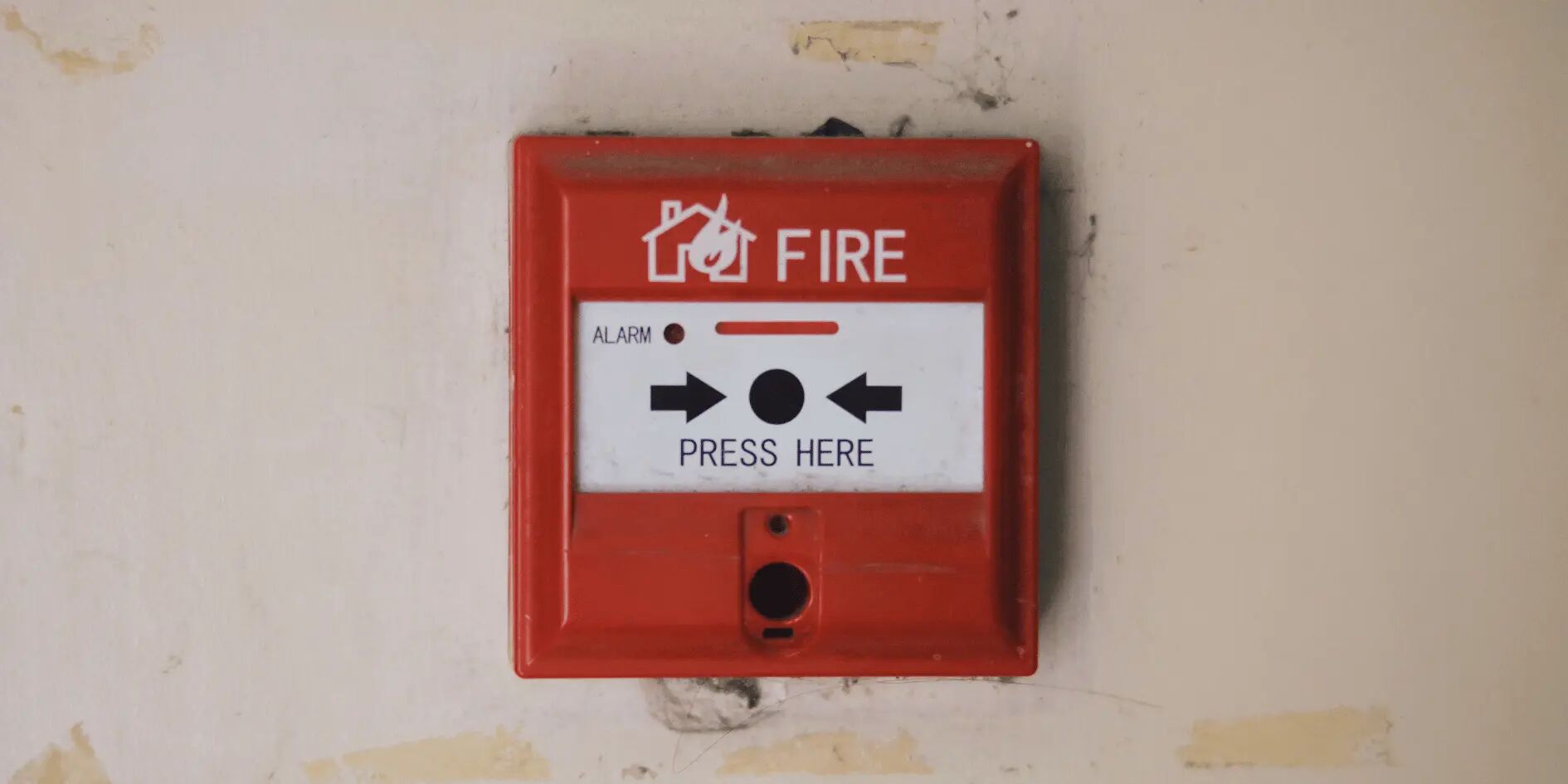
The detection and alarm system is the building's early warning. Everything, right from the smoke detectors, the heat detectors, and the manual call points (the red boxes near the staircase), reports to a fire alarm panel. The panel sounds the hooters and, in a larger building, tells the fire command centre which zone has triggered the hooters.
Every minute between the first smoke and the first alarm is a minute taken away from the evacuation.8
What the Auditor Checks in a Detection and Alarm System
- Every area is covered by a detector of the right type (smoke in an office, heat in a kitchen or a DG room)
- The panel shows no faults, isolations or bypassed zones
- The hooters are audible in every part of the building, including the toilets and the basement
- The test records and the false alarm log are maintained
Please note that a switched-off detector is one of the most common findings we come across during our fire safety audits. People usually turn off the detectors due to repeated false alarms from cooking smoke or dust, and never remember to switch them back on.
2. Fire Fighting and Suppression Systems
The main goal of the firefighting system is to hold the fire at its point of origin until the fire brigade arrives. In general, it means four things:
- The portable extinguishers
- The hose reels and hydrants
- The sprinklers that open over the fire on their own
- The gas-based suppression in rooms where water would do more harm than good, such as a server room or a panel room.
A fire safety auditor thoroughly checks all of the above. The pump room is the first place a good auditor goes, because a pump that has not been started in months rarely starts when it must.
Below are the things that require special attention during the audit:
- The main fire pump starts on a pressure drop, and the small jockey pump holds the line pressure between uses
- The hydrant and sprinkler lines hold pressure without leaks, with the valves open and secured
- The extinguishers are of the right class for the risk, within their refill date and mounted where they belong
- The water tank holds the reserve the system was designed for
3. Life Safety and Emergency Evacuation
Life safety is the third and most important element that keeps the occupants ahead of the smoke.9
It includes the protected staircases, the fire doors, the compartmentation, the emergency lighting and the signage that points the way out. The people are responsible for planning the rest: an evacuation plan, the assembly points, the floor wardens and the drills that show whether the plan works. In a high-rise, the refuge areas on the floors give the occupants a safe place to wait when the staircase is full.10
What the Auditor Checks in Life Safety Arrangements
- The escape routes are clear, unlocked and lead to open air, with no stock or two-wheelers in the way.
- The fire doors close on their own and are not wedged open
- The emergency lights and the exit signs work when the mains supply is switched off
- The evacuation plan is displayed, and the drill records show it has been practised
Simply put, a drill costs an hour. Finding a locked terrace door during a fire costs far more. How the three elements are kept in working order is the subject of the next section.
Fire Safety Maintenance and Inspection
Fire systems fail silently over time. A pump that is never run, an extinguisher that is never weighed, and a fire door that is never closed all look fine from the corridor. However, such things need maintenance and periodic care.
Maintenance is what keeps the three elements above ready, and inspection is what proves that they are. It is the routine work, usually under an annual maintenance contract (AMC) with a fire contractor:
- Running the fire pumps and exercising the hydrant valves on a fixed schedule
- Checking, refilling and pressure-testing the extinguishers before their due dates
- Testing the detectors, the panel and the hooters zone by zone, along with the door closers, the emergency lights and the exit signs
- Recording every check in a log book kept at the pump room or the security cabin.
Such a contractor only checks the systems they maintain, and their report covers only those.
On the other hand, a fire safety audit is different. It is conducted by an independent auditor who has no maintenance contract with the building. It covers the whole building against the National Building Code and the state fire safety rules. The goal is to evaluate the fire safety elements in their as-found condition with measurements. For example, the pressure at the farthest hydrant, the sound level of the hooter, and the time a fire door takes to close. The findings come back prioritised, with the serious ones first, so the owner knows what to fix this week and what can wait for the budget.11
In Maharashtra, such inspection is mandatory for the buildings the Maharashtra Fire Act covers. To learn more about what the audit covers and what the report contains, please read our Fire Safety Audit page. Maintenance keeps the systems alive; the audit proves it to the fire inspector and insurer. As such, the building needs both.
Fire Safety in Electrical Installations
Among all the causes we discussed, the electrical installation deserves its own section, because it causes most fire incidents.12 The fire pump works, the doors close, the drills are done, and the fire still starts inside a panel that was last opened on the day of installation.
The usual suspects are few:
- Loose terminations
- Overloaded circuits
- Undersized cables
- Ageing insulation
- Unauthorised extensions
- Poor earthing
Each one turns electricity into heat somewhere it should not, and the heat then has plenty of fuel nearby: the cable insulation, the dust inside the panel, the cardboard someone stored against it.13
Electrical fire safety means four things in practice:
- Cables and protective devices sized for the load, with breakers that actually trip
- A properly installed earthing system, tested on schedule and not just on paper
- Panels kept clean, closed and clear of storage, with the cable openings sealed against fire and smoke
- A thermography scan of the panels under load, so a hot joint is found before it fails14
This is where a fire audit needs an electrical specialist, not just a fire engineer. At PowerTech, the audit team includes a Chartered Electrical Safety Engineer (CESE), authorised by the Government of Maharashtra under Regulation 6 of the Central Electricity Authority (Measures relating to Safety and Electric Supply) Regulations, 2023, so the electrical side of fire risk is assessed by a specialist in electrical installations.15 To learn more about the electrical safety audit, please read our Electrical Safety Audit page.
Quick Tips to Improve Fire Safety in a Facility
Most of the improvements below cost little and need no consultant or licensed auditor. Start with the ones you can do this week.
- Walk the escape routes every week: Check every staircase, corridor and exit door. They should be clear, unlocked and lit, with no stock, two-wheelers or furniture in the way.
- Keep the fire doors closed: A wedge under a fire door turns a compartment into a chimney. Remove the wedges and repair the door closers.
- Run the fire pump on a fixed day: A pump that starts every week is far more likely to start on the day of the fire. Log every run in the pump room register.
- Read the extinguisher tags: Check the service and refill dates and the pressure gauge, and make sure the type matches the risk; water has no place near an electrical panel.
- Open the panels: Get the electrical panels cleaned, the covers closed, and the storage moved away, and get a periodic thermography scan to find the hot joints before they fail.
- Fix the false alarms, not the detector: If a detector keeps tripping, change its type or its location. Never leave it switched off at the panel.
- Control hot work with a permit: No welding, cutting or grinding without a permit, a fire watch and an extinguisher within reach, especially during maintenance and fit-out work.
- Store flammables properly: Keep the paints, solvents, LPG and diesel in a ventilated store away from panels and staircases, and clear the packaging waste daily.
- Train the people and run the drills: Every floor needs a warden who knows the assembly point, every occupant should have walked the route at least once, and the drill record should show it.
- Book a fire safety audit at the right time: It means when the fire NOC comes up for renewal, when the insurer asks for it, after a near miss or an incident, when the occupancy or the fit-out changes, and in Maharashtra, whenever the Act covers your building. An independent, licensed auditor turns the nine tips above into a prioritised action list. On the other hand, a small office that meets its NOC conditions and keeps up the maintenance can start with the first nine.
PowerTech: Licensed Fire & Life Safety Auditor for Buildings and Factories in Maharashtra
PowerTech Energy Solutions has conducted hundreds of fire, electrical, and energy audits since 2014 for massive housing societies and industry-leading factories. We have offices in Pune, Mumbai and Nashik. We hold a Fire & Life Safety Auditor licence MF&ES/F&LSA/0029.
Every system this article covers, from the alarm panel to the escape routes and the electrical installation, is inspected physically during the audit by our expert engineers, along with the maintenance records and the drill register.
We offer the following audit and compliance services:
- Fire Safety Audit
- Electrical Safety Audit
- Energy Audit
- Thermography Audit
- Earth Pit Testing
- Power Quality Audit & Harmonic Study
- Energy Saving Contracts on BOT Model
Get In Touch
Tell us what has put fire safety on your desk, whether it is a fire NOC renewal, an insurer's query, a new fit-out or the Section 45A mandate, along with the building type, height, use and city. You will hear from us within one working day, and after a short call about the site, you will receive a scope of work written for your building, with commercial terms and no obligation. Tenders and RFPs are welcome. The auditor named on the licence conducts the audit in person, travelling from Pune, Mumbai or Nashik, and the report opens with the findings that cannot wait.
Contact our team of licensed auditors today to find out where your building stands on all three elements of fire safety and to book the audit before the NOC or the insurer asks for it.
References
- Thakkar, M. R. (October 27, 2021). 70% fire incidents due to short circuit; BMC wants housing societies to conduct electrical audit. Hindustan Times. https://www.hindustantimes.com/cities/mumbai-news/70-fire-incidents-due-to-short-circuit-bmc-wants-housing-societies-to-conduct-electrical-audit-101635343178092.html
- Bhalerao, S. (January 18, 2019). Mumbai: 70 to 80% fires due to faulty electrics, says BMC. The Indian Express. https://indianexpress.com/article/cities/mumbai/mumbai-70-to-80-fires-due-to-faulty-electrics-says-bmc-5543949/
- (2007). Maharashtra Fire Prevention and Life Safety Measures Act, 2006. Maharashtra Fire Services. https://mahafireservice.gov.in/directorate/fire-act/2006/Maharashtra%20Fire%20Prevention%20and%20Life%20Safety%20Measures%20Act%2C%202006..pdf
- Tembhekar, C. (March 6, 2012). Faulty wiring cause of most fires in city. The Times of India. https://timesofindia.indiatimes.com/city/mumbai/faulty-wiring-cause-of-most-fires-in-city/articleshow/12154845.cms
- (2023). Fire Hazards During Welding and Cutting Operations. HSE Study Guide. https://www.hsestudyguide.com/fire-hazards-during-welding-and-cutting/
- Chavan, D., Manjunatha, G., Singh, D., Periyaswami, L., Kumar, S. & Kumar, R. (2022). Estimation of spontaneous waste ignition time for prevention and control of landfill fire. Waste Management 139, pp. 258-268. https://doi.org/10.1016/j.wasman.2021.11.044
- Kathuria, R., Qamar, M. Z. & Mulley, N. (2014). Protection from Leakages of Gas from LPG Cylinders. International Journal of Engineering Research & Technology (IJERT) 3(10). https://doi.org/10.17577/IJERTV3IS100168
- (2026). From alarm to action: a systematic review of pre-evacuation time influences in fire emergencies within the built environment. Safety Science 200. https://doi.org/10.1016/j.ssci.2023.107213
- (n.d.). Fire and Life Safety Educator Textbook. https://studylib.net/doc/28081680/fire-and-life-safety-educator
- (2024). Refuge Area in High-Rise Buildings: Meaning, Rules & Safety. PropertyPistol Insight Team. https://www.propertypistol.com/blog/what-is-refuge-area-in-a-building/
- Team, I. E. (2012). Fire Safety Audit: Why It’s Essential Today. ISR Magazine. https://www.isrmag.com/fire-safety-audit-the-need-of-hour/
- Kumar, K. S. & Kalappan, K. B. (2023). Fire risks in electrical installations: the review. E3S Web of Conferences 376. https://doi.org/10.1051/e3sconf/202337601113
- (2026). Earth Leakage Circuit Breaker (ELCB): Working Principle, Function & Applications. Testbook. https://testbook.com/electrical-engineering/earth-leakage-circuit-breaker
- (n.d.). Thermography on Electrical Panels. Therness. https://www.therness.com/services/electrical-panels-thermography/
- Maharashtra, G. o. (n.d.). Guidelines for Authorising Chartered Electrical Safety Engineers (CESE). https://gr.maharashtra.gov.in/Site/Upload/Government%20Resolutions/English/201909191955444510.pdf
Leave a Reply
Your email address will not be published. Comments appear after we have approved them. Required fields are marked *.